
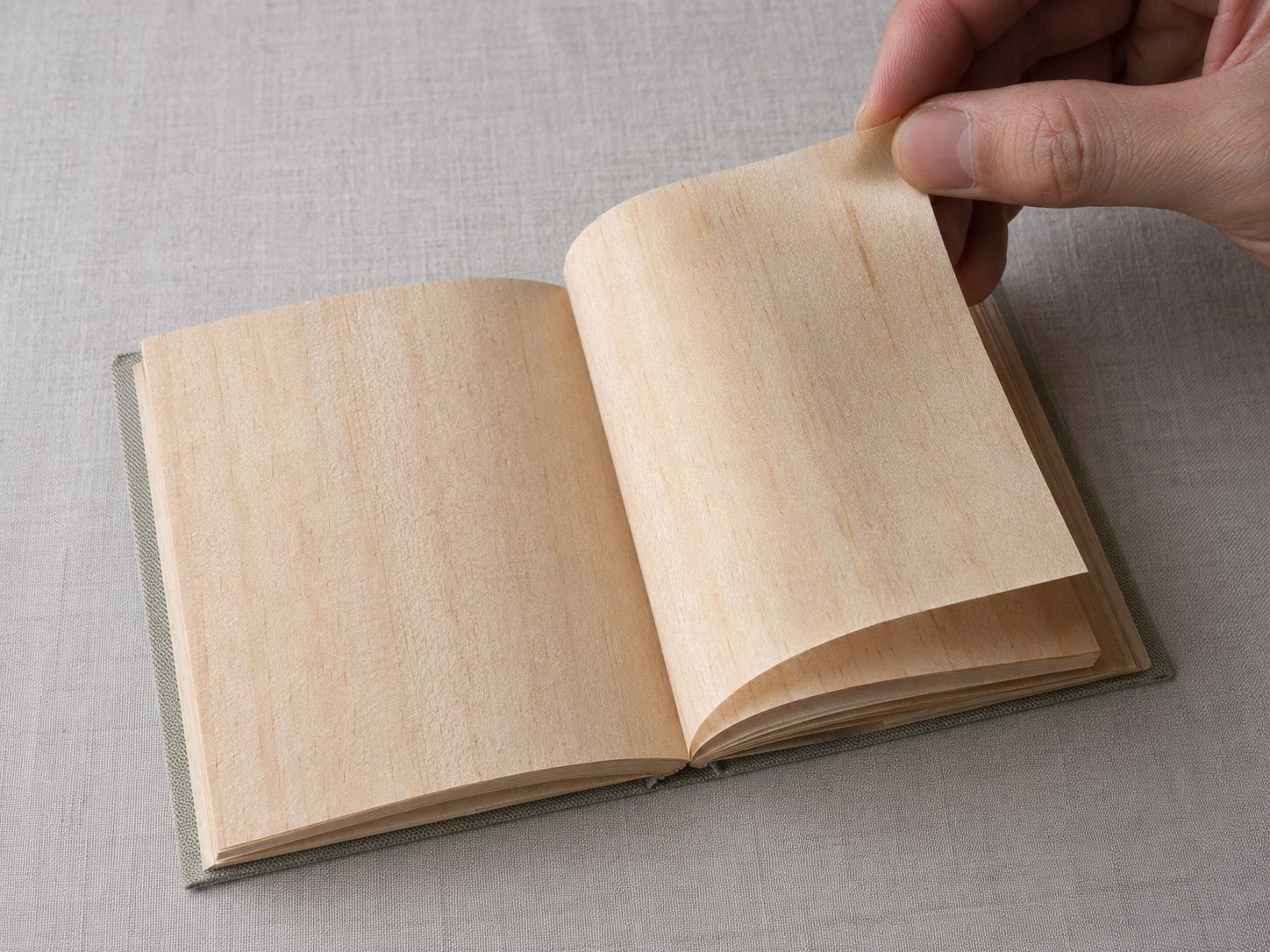
Short answer: use a wood veneer notebook for notes you want to keep, not for rough, wet, or throwaway writing.
A notebook made with wood veneer changes the way you write before the first page is filled. It has grain, a faint material weight, and a surface that feels closer to a small wooden object than to ordinary stationery.
That does not mean it should sit unused. It means it is better for a slower kind of note: a few lines from the day, a sketch you want to revisit, a plant name, a stamp, a gift message, or a short record from a trip.
What makes wood veneer different from paper?
Paper usually asks to be blank. Wood veneer does not. The grain is already there, so every page carries a little visual movement before you write on it. That can make a simple note feel more placed, almost like it belongs to the object rather than floating on top of it.
The tradeoff is that veneer behaves like a natural material. Sheets can vary in tone and texture. Edges may feel layered. The surface may ask for gentler pressure than a standard notebook. Those qualities are part of its appeal, but they also shape how it should be used.
What should you write in it?
Think compact and intentional. A wood veneer notebook is well suited to short daily notes, small sketches, poetry fragments, travel observations, stamp collecting, plant records, and gift writing.
It is less suited to heavy meeting notes, fast ballpoint scribbling, wet media, large pasted-in ephemera, or anything that needs pages to behave exactly the same from first sheet to last.
How should you keep it?
Keep the notebook dry and away from heat. Do not leave it pressed under heavy objects for long periods, and avoid bending it sharply in a bag. If you carry it often, place it in a pouch or between flatter items so the edges stay protected.
If the tone deepens with time, or if the surface develops small changes, treat that as part of the material record. A notebook like this is not trying to stay industrially perfect. It is meant to become more personal as it is handled.
Who is it best for?
It is a good fit for someone who likes writing tools with presence: designers, journal keepers, artists, paper lovers, material collectors, or anyone who appreciates small objects that make a desk feel more considered.
For a gift, it works best when the reason is clear. Give it to someone who notices texture, wood grain, quiet tools, and the small ceremony of writing something down.