
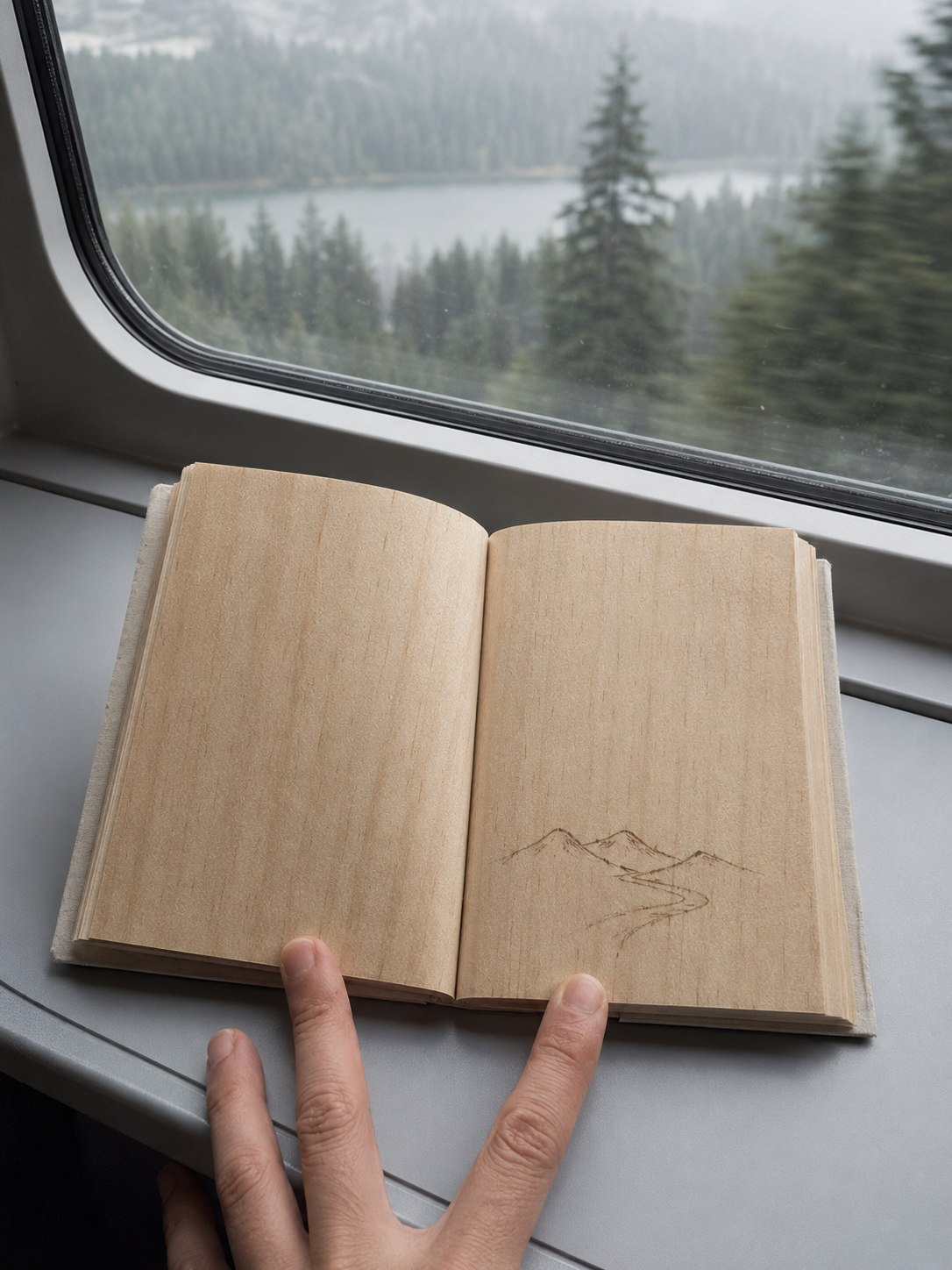
Nature journaling is the practice of recording what you notice outdoors with words, sketches, dates, colors, or questions. A beginner needs only a notebook, a familiar place, and ten quiet minutes.
The first entry does not need to happen in a forest. A tree outside an apartment, weeds along a parking lot, or the weather seen from a kitchen window is enough. The useful part is choosing one thing and staying with it longer than a glance.
That small pause is the beginning of a nature journal. It is not a field guide you must get right, and it is not an art portfolio. It is a dated record of what was present and what you managed to notice.
Bring less than you think
Start with a notebook and one tool that does not require attention. A pencil works in cold weather and can make both words and quick tonal marks. A ballpoint pen is equally good if you prefer not to erase. Leave the watercolor set, ruler, and bag of supplies at home for the first few outings.
Choose a place you can return to. Repetition makes ordinary changes visible: a new bud, a lower shadow, a bird call that was absent last week.
Record evidence before interpretation
Begin with the date, time, place, and weather. Then write what you can observe without explaining it: five narrow leaves, a rough gray stem, three calls from the same direction. Questions can come next.
This order keeps an entry grounded. “The tree looks tired” is an impression. “Leaves are curled at the brown edges” is something you can compare when you return.
12 nature journaling prompts for beginners
- Find three versions of the same color and name the difference between them.
- Draw the outline of one leaf without adding veins or shading.
- Write down every sound you hear for two minutes.
- Describe the smallest moving thing in view.
- Notice where light stops and shadow begins.
- Choose one texture and compare it with something indoors.
- Record a question you cannot answer yet.
- Look up, straight ahead, and down. Write one detail from each view.
- Follow one line: a branch, a crack in stone, a trail, or the edge of water.
- Make a tiny map of where you are sitting.
- Return to an earlier subject and list what changed.
- End the entry with one sentence beginning, “I almost missed…”
A ten-minute entry that is easy to repeat
Use the first minute for date, place, and weather. Spend four minutes looking without writing. Use the next four for a sketch, a list, or a few lines. In the final minute, add one question.
Stopping after ten minutes is allowed. A short entry with a real observation is more useful than a beautiful spread that makes the next outing feel like work.
You do not need to know the species
Write “small brown bird with a pale stripe” when you do not know the name. Identification can happen later, or not at all. A journal can hold uncertainty without becoming less accurate.
For more structured seasonal exercises, the Illinois Extension nature journaling prompts offer a useful model: look for patterns, ask questions, and return.
Choose the page for the kind of record
Paper is the practical choice for long entries, wet media, and fast sketching. A small wood-page notebook suits a different rhythm: brief field notes, plant names, dates, dry pencil marks, and one observation worth keeping. The grain is already part of the page, so it is best when the writing stays spare.
Read how to write on wooden pages, or see the A6 Wood Veneer Notebook.