
A one-line-a-day journal is a daily record made from one specific sentence. The easiest way to keep it is to write about one concrete detail, use the same cue each day, and leave missed dates blank.
One line sounds almost too small to matter. That is exactly why the format works for people who own several half-filled journals. It removes the obligation to summarize an entire day and asks for one thing that would otherwise disappear.
The line might be a sentence someone said, the first cold morning, a meal eaten late, or the moment a difficult decision became obvious. Specificity gives a short entry its weight.
Decide what “one line” means
It can be one sentence, one bullet, or the amount that fits on a single ruled line. Choose the rule before starting and keep it uncomplicated. A strict word count usually adds more friction than it removes.
The entry does not need to be wise. “The basil finally grew a second pair of leaves” will often be more interesting in five years than a general statement about feeling grateful.
Give the journal one dependable cue
Keep the notebook where the day already pauses: beside a toothbrush, near the kettle, or on top of the book read before bed. The location should do the reminding.
Choose a consistent question when the sentence does not arrive on its own. Use one of these:
- What detail would I photograph if I had to choose only one?
- What changed today, even slightly?
- What did someone say that I want to remember?
- What ordinary thing felt unexpectedly good?
- What am I carrying into tomorrow?
Write a detail, not a verdict
“Today was stressful” closes the day quickly. “I reheated the same cup of tea three times” gives the feeling a shape. Concrete details are easier to revisit because they let the reader reconstruct the mood without being told what to feel.
Names, weather, places, and small objects help. So do fragments of dialogue. You are leaving evidence for a future version of yourself.
Do not repair missed days
Leave the date blank and continue. Reconstructing a week from messages and photographs turns a light habit into administration. The empty space is an honest part of the record.
If several days pass, begin with “Today I noticed…” There is no need to explain the absence to the notebook.
Choose a format you can see
A dated five-year journal makes comparison easy. A pocket notebook travels well. A plain notebook gives each sentence more room and can begin on any date. The best format is the one that remains visible and easy to open.
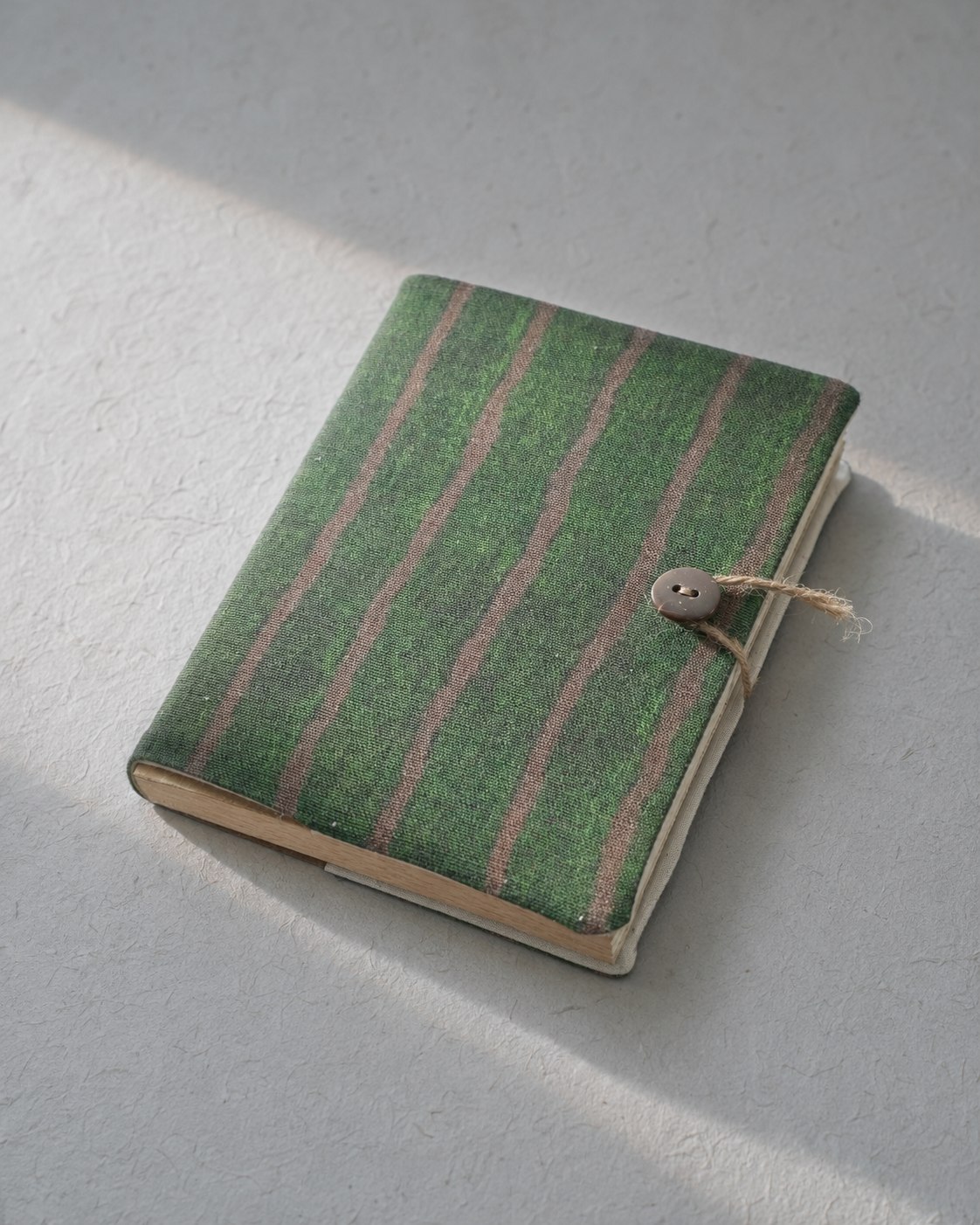
A wood-page notebook is not the most efficient option for years of daily entries. It is better for a finite record: one line from a journey, one season in a garden, the first months in a new home, or a sentence written on each anniversary. Use pencil, ballpoint, or another dry tool with light pressure.
Try seven lines before buying a system
Use any notebook for one week. At the end, read all seven lines at once. Notice which sentences bring the day back and which feel generic. That small review will teach you more about your preferred format than a complicated journaling plan.
For more starting points, read what to write in a small wood notebook. The A6 Wood Veneer Notebook suits short, deliberate records rather than high-volume daily writing.