
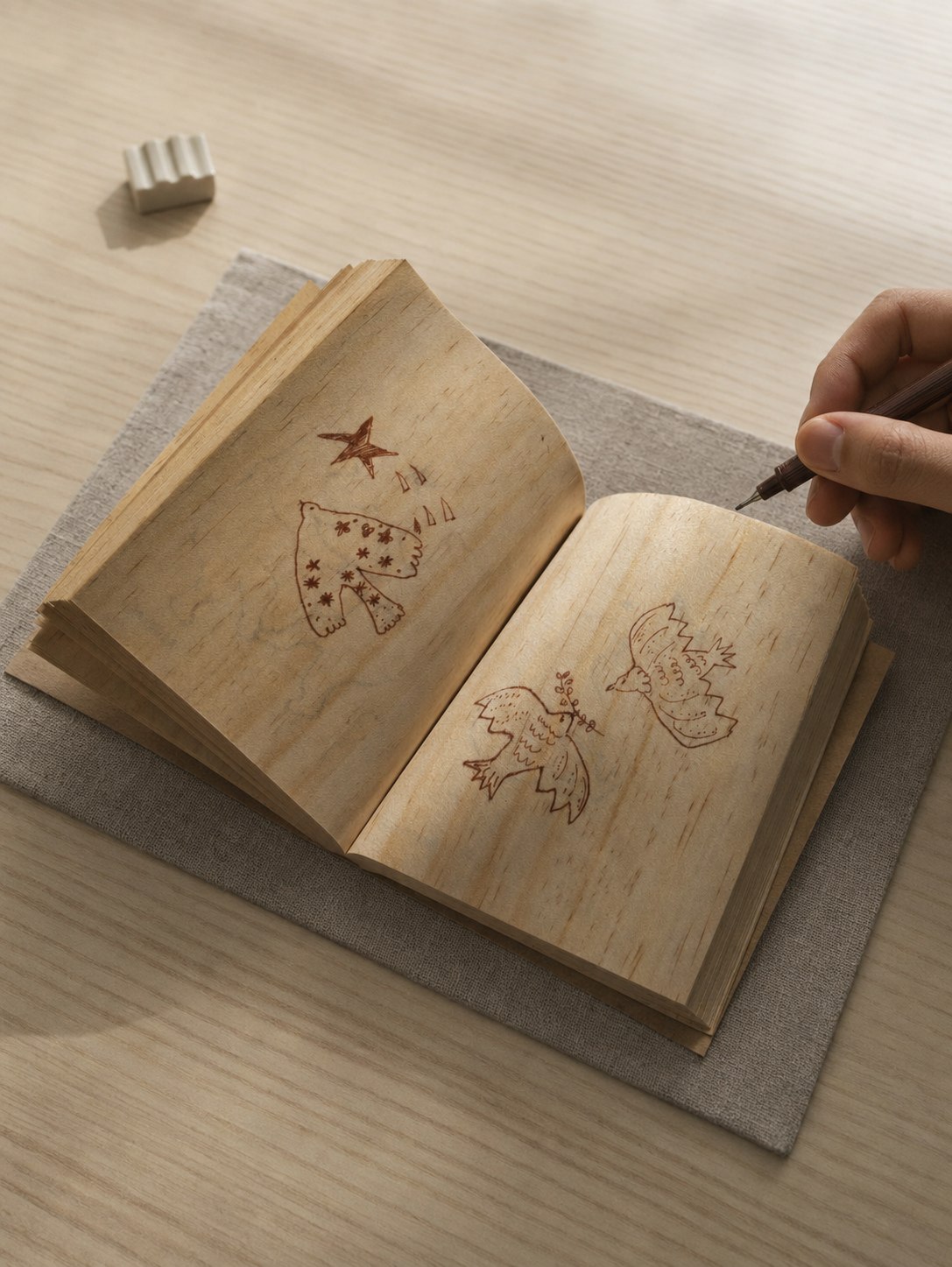
Write on wooden pages with a light hand, test your pen first, avoid wet ink, and keep the notebook dry when not in use.
A wooden page can be written on, but it should not be treated exactly like paper. The surface has grain. The sheet has direction. Ink and pressure can behave differently from one page to another.
That is not a flaw if you choose the notebook for the right kind of writing. It simply means the first rule is to slow down.
Start with a test line
Before writing something important, test your pen on a back page or a less visible corner. Look for feathering, bleed, drag, and drying time. A pencil, colored pencil, ballpoint pen, or a dry fine pen will usually be easier than wet ink.
Use lighter pressure
Heavy pressure can mark the surface more than intended. Let the tool move gently and keep the writing compact. Wooden pages often feel best with short notes, small sketches, labels, stamps, and one-line records.
Avoid wet media
Watercolor, brush pens, heavy markers, and very wet fountain pens can create problems. They may bleed, stain, or warp the surface. If a tool needs time to soak into paper, it is probably not the first choice for wood veneer.
Store it like a small wooden object
Keep the notebook dry, away from heat, and protected from sharp bending. If you carry it, place it in a pouch or between flat items. A little care helps the pages age more gracefully.
What to write first
Write something low-pressure: today’s date, a place name, a plant name, a line from a walk, or a short note to the person receiving it. The first mark should make the notebook usable, not more intimidating.