
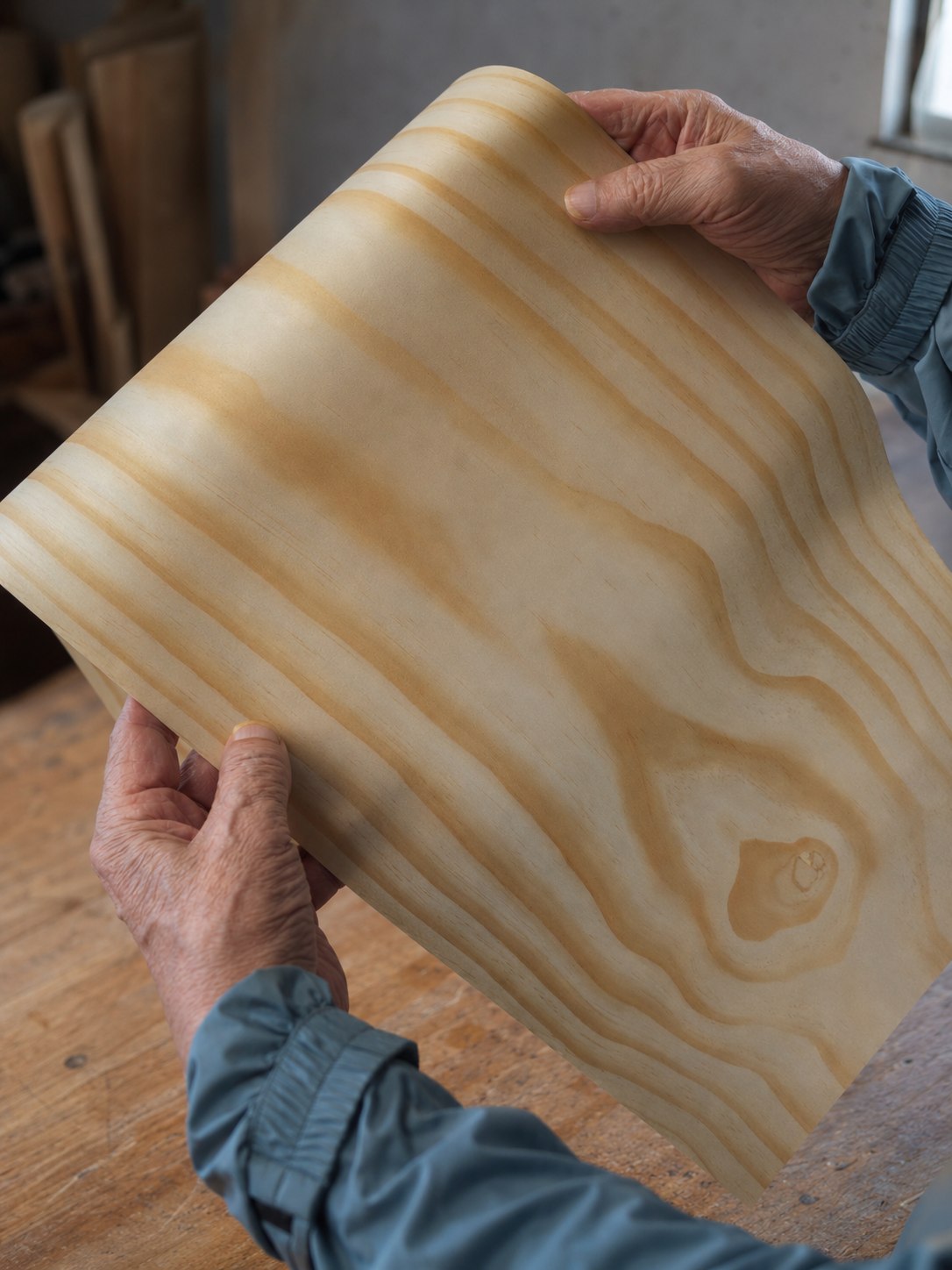
A wood veneer notebook is not just a paper notebook with a different look. The material changes the way it feels, the way it should be handled, and the kind of notes it suits best.
Ordinary paper is designed to stay quiet. It receives writing and mostly disappears. Wood veneer stays present. Grain, tone, and edge are part of the page before a pen ever touches it.
The first difference is pressure
A standard notebook can usually take quick writing, heavy pressure, and rougher daily use. A veneer notebook asks for a lighter hand. It works best when the writing is slower: short notes, sketches, stamps, small lists, or lines you want to keep.
The second difference is variation
Paper notebooks try to make every page feel the same. Wood veneer pages can vary slightly in grain, shade, and surface. That variation is part of the object. It makes the notebook feel more like a material record than a disposable pad.
The third difference is care
Wood veneer should be kept dry, away from heat, and protected from sharp bending. It is not the right surface for wet media or careless bag use. If you want a rough everyday notebook, paper is more practical. If you want a small object that makes writing feel deliberate, veneer makes sense.
Who should choose which?
Choose paper for speed, volume, and low-friction work. Choose wood veneer for notes with presence: a gift message, plant names, travel fragments, sketch ideas, or a quiet desk ritual.
View the A6 Wood Veneer Notebook or browse more material notes.